
By Leo and Wendie Black
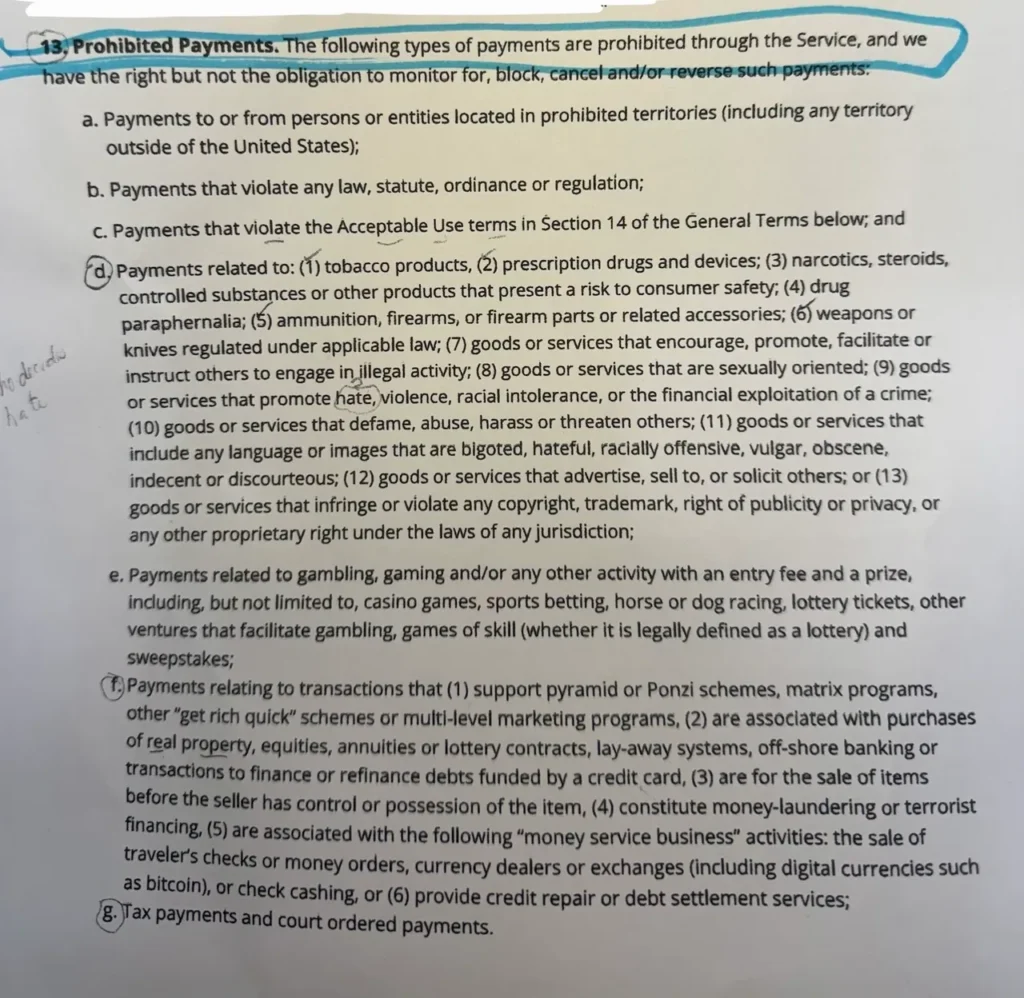
We recently went into America First Credit Union here in Mesquite and were given their Digital Banking Terms and Conditions to accept. Like most people, we’ve probably clicked “agree” to more of these things over the years than we’d care to admit. Who actually sits there and reads every page of the fine print? Well, this time we did, and we’re glad we did because when we got to Section 13, we stopped.
Section 13 is called “Prohibited Payments,” and some of it makes perfect sense. Obviously, a financial institution shouldn’t allow illegal transactions, money laundering or terrorist financing. We certainly have no argument with any of that. But then we kept reading and found that the prohibited payments also include those related to “ammunition, firearms, or firearm parts or related accessories.”
That immediately bothered us. The agreement already says you can’t use the service for transactions that violate the law, so an illegal firearm transaction would already be prohibited. Why, then, are firearms and ammunition specifically singled out? We are strong supporters of the Second Amendment, and if an American can legally own a firearm, legally purchase that firearm and legally purchase ammunition for it, we don’t understand why our credit union needs to involve itself in that transaction.
What concerned us even more was the language immediately before the list. America First says it reserves the right to “monitor for, block, cancel and/or reverse” prohibited payments. We’d really like to know what “monitor” means. Are they monitoring merchant categories? Individual transactions? Is this automatically done by an outside payment processor? Does America First actually use this provision to block lawful firearm or ammunition transactions? Those seem like fair questions to ask before agreeing to something.
Maybe there’s a perfectly reasonable explanation, and we’re willing to hear it. Perhaps this language is required by a third-party payment company. Maybe some of these restrictions apply only to one very specific type of digital payment. Maybe there’s some federal regulation behind it. If that’s the case, just tell the members. But when we’re asked to agree to language giving a financial institution the ability to monitor, block, cancel or reverse certain payments, we’d like to understand exactly what we’re agreeing to.
Firearms were the issue that caused us to refuse the agreement, but once we started reading Section 13, we noticed several other things that left us scratching our heads. It references certain payments involving tobacco products, prescription drugs and devices, gambling and gaming, Bitcoin and other digital currencies, certain real estate transactions, tax payments and court-ordered payments.
The tax payment part did make us laugh a little. If America First has discovered a legitimate way to get us out of paying taxes, maybe we judged Section 13 too quickly. Somehow, though, we have a feeling the IRS isn’t going to accept “our credit union wouldn’t let us” as an excuse.
Then there’s another word in the agreement that really caught our attention: “discourteous.” The prohibited-payment section includes certain goods or services containing language or images considered “discourteous.” We understand illegal. We understand fraudulent. We understand obscene. But we’re not quite sure when our credit union became responsible for deciding whether something we’re purchasing has good manners.
Who decides what “discourteous” means? Is that determination made by America First? An outside company? A computer program? We’re old enough to remember when your financial institution mostly wanted to know whether you had enough money in your account to cover the check. Apparently banking has gotten considerably more complicated.
Again, there may be explanations for all of this. The agreement mentions outside service providers, so some of these restrictions may originate somewhere other than America First itself. That’s one reason we’re not interested in making accusations about motives. We’d rather America First simply answer the questions.
Most importantly, we’d like to know who decided that firearms, ammunition, firearm parts and accessories belong on this prohibited-payment list. Is this required by federal law? Is it a requirement of an outside payment processor? Is it a policy America First voluntarily adopted? Does it apply to otherwise legal firearm transactions? If America First didn’t create the restriction, we’d like to know who did and why America First agreed to it.
There’s another part of this story that makes the whole thing particularly interesting. America First isn’t a traditional bank; it’s a credit union. America First describes credit unions as member-owned financial cooperatives, and its Board of Directors is elected by the membership. That means the people putting their money there aren’t merely customers. They’re members and owners of the institution.
If the members are the owners, then we think the owners have every right to ask questions about the policies being imposed on them. If a significant number of America First members don’t believe lawful firearm and ammunition transactions should appear on a prohibited-payment list, the credit union ought to listen to them.
When we were handed this agreement in Mesquite, we didn’t yell at anybody, make a scene or blame the employees at our local branch. The people working behind the counter didn’t write Section 13, and we’re pretty sure they don’t have the authority to rewrite it between deposits. We simply read what we were being asked to accept, found something we strongly disagreed with and refused to accept it.
That’s part of the free market, too. America First has the right to establish lawful terms for the services it provides, and we have the right to read those terms and decide whether we’re willing to accept them. Other members have that same right, including the right to contact a credit union they collectively own and ask that a policy be explained or changed.
If you’re an America First member, we encourage you to read Section 13 yourself rather than simply taking our word for it. If you read it and aren’t bothered by it, that’s your decision. If you read it and feel the same way we do, then respectfully make your voice heard. Ask America First why firearms and ammunition are specifically listed. Ask whether the restriction applies to lawful transactions. Ask who established the policy, what “monitor” actually means and whether the Board of Directors supports keeping this language in the agreement.
America First Credit Union can be reached at 1-800-999-3961 or by mail at P.O. Box 9199, Ogden, UT 84409. Members can also contact the credit union through its official website and secure online banking.
Contact America First Credit Union
We hope anyone who contacts America First will be polite about it. Calling the Mesquite branch and unloading on an employee who had nothing to do with writing the policy isn’t going to accomplish anything. Contact the people who actually have the ability to explain it or change it, and let them know what you think.
We’re also not asking everyone to agree with us about firearms. We’re simply asking what we think is a reasonable question: If the purchase is legal, why is it specifically on the prohibited list? Maybe America First has a good answer. We’d genuinely like to hear it.
Until then, we’re glad we took the time to read what we were being asked to accept. Maybe that’s something all of us should do a little more often. It’s awfully easy to scroll through a few pages, click “agree” and get on with our day, but sometimes the fine print contains something worth stopping for.
For us, Section 13 was one of those times. We read it, thought about it and decided those weren’t terms we were willing to accept. So we didn’t.